Showing posts with label bektashi. Show all posts

Tuesday, March 18, 2008

An Appeal for Help

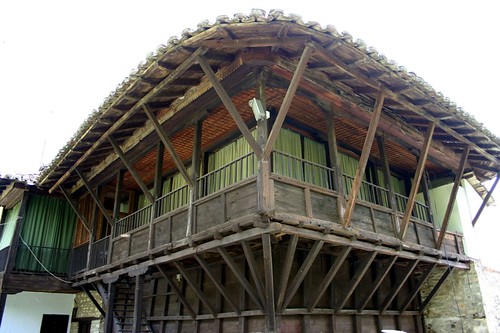
I've recently, unwittingly, become embroiled in an out-of-country dispute related to my religious community at large. As mentioned in a previous post, the Harabati Baba Teqe in Tetovo, Macedonia, is under siege by armed Sunni extremists, who want to bull-doze these grounds:


Beautiful, no? Since I came across photos of the place on Google Earth, I've wanted to go and visit. The fact that it is a Bektashi teqe made all the difference, too, as it the buildings belong to my religious community.

But the Sunni Muslim majority in the country want to tear down these buildings and build a 'mega-mosque' on the site instead; something totally unnecessary in a town with 24 mosques already. But Macedonian law recognizes only one religious organization per religious community, and it chooses to recognize the Islamic Community of Macedonia - all Sunni - and not my community, the Shi'i Bektashi.

Never mind the fact that it recognizes Roman Catholics and Macedonian Orthodox, rather than just one 'Christian' community.

My willingness to jump into the fray and do whatever I can to try to save the teqe has pushed me into some sort of ad hoc leadership role in the fight for the teqe. Some friends have been requesting the chance to bring Alevi supporters down from Germany to physically throw the Sunni invaders out of the teqe, but I have been trying to insist on a more Gandhian approach. Most of the invaders are young, poor, unemployed ethnic-minority Albanians - people without power, looking for people with less power to bully around, in an attempt to feel big about themselves. They're just puppets, really, of the Islamic Community of Macedonia in their bid to gain unfettered control over the entire Muslim community in Macedonia.

Meanwhile, the Slavic, Christian Macedonian majority is unwilling to interfere. Of course not: this is a squabble between Albanians and Albanians, Muslims and Muslims - the minority fighting with itself, leaving the majority to consolidate it's power.

The international community is no more open to helping. With the legal situation in limbo, journalists have no interest in it. Macedonia's relative stability by comparison with the rest of the Balkans has earned it favorable reports from the U.S. and E.U., and the country will likely reap the reward of NATO membership early next month. The U.S. Ambassador has, meanwhile, diplomatically refused to meet with the Bektashi community spokespeople - a shameful shunning on her part.

All of which leaves my little community with no real friends. I am trying to generate an interest in the Alevi diaspora community, as they share many features of Bektashi belief and are likewise shunned by the Muslim majorities, but running into a language barrier. I am remiss to appeal to traditional Twelver Shi'a in the United States, Iran, Lebanon or the like out of fear that doing so will either replace armed Sunnis with armed Shi'a, or that it will result in a violent confrontation. The Bektashi community appears to have asked that a non-violent solution be found, and I am in total agreement with them on this. The invaders may take our teqe, but we are refusing to let them take our honor.

They do seem to be taking our hope from us, though. Apart from my Macedonian counterpart and I, we seem to be poor on pure gumption.

So... I guess I'm turning here for some help, as well. I know that there may be a few Quakerly types who read this blog; can I appeal to that of God in you to lend a hand? We do not ask much: we are trying to organize an appeal to an authority, any authority that will listen, and all we are asking for that authority to do is to help us get our teqe back, and pressure the Macedonian government to grant us our autonomy as a religious sect.

It's weird; I've never been much for political activism. Yet here I am.

Wednesday, March 12, 2008

Sunni Extremists Besieging Macedonian Religious Heritage Site


On August 15th 2002, and group of Sunni extremists besieged the Harabati Baba Tekke, a traditionally Bektashi Sufi lodge. In spite of documentation attesting to their ownership of the lodge, the Macedonian Bektashi community is locked in a legal struggle to maintain their right to the tekke. More recently, the extremists have laid claim to more of the lodge, and have begun firing their weapons inside the tekke grounds.

If you are an American citizen, we the worldwide Bektashi community ask that you please write to your congressmen in both the House as well as the Senate, to express your strenuous objection to such a gross violation of religious freedom.

You can write to your representative, and your senators . You may also wish to write the Department of State, or just plain ol' President Bush, or Vice President Cheney. You might also try using FaxZero.com to send up to two free faxes a day to your congressional representatives, the Albanian American Civic League (914-762-5102), or others. I recommend that you state the following in your fax:

"I write to you in strenuous protest of invasion of the Harabati tekke in Tetovo, Macedonia by armed Sunni extremists, and ask you to call upon the U.S., E.U., and U.N. authorities in Skopje, who monitor terrorist threats in the Balkans, to pressure the Macedonian government for the immediate removal of the extremists from the Harabati tekke, by legal force if necessary, and protect the tekke from further interference.

The extremists are currently besieging the Sufi dervishes inside the compound, have threatened or intimidated visitors, and have been discharging their weapons around the compound. I feel this is unacceptable, and ask you to address the issue immediately.

Naim Frasheri, poet-laureate of the Albanian national cause and Bektashi Muslim himself, said of us: "Let them be peaceable, let them remember the poor, let them shun evil and folly, let them cast into the Way all works that are needful for mankind and for religion, and let them forward all things good. Together with the chiefs and notables let them encourage love, brotherhood, unity, and friendship among all Albanians: let not the Muslims be divided from the Christians, and the Christians from the Muslims, but let both work together. Let them strain towards enlightenment, that the Albanian, who was once reputed together throughout the world, be not despised today."

Our brothers in Macedonia have been seeking recognition from the government since 1993, to no avail; we ask you to help us in calling upon the United States government, the European Union, and the United Nations to press the Macedonian government to recognize our religious freedom, and restore to us our Sufi lodge."

Also, please write an email to the United States Embassy in Macedonia.

If you are a European - or just plain outraged - you can also write to the EU Mission in Skopje and voice an objection about Macedonia's prospective entry to the EU while this matter goes on. Brits, please email Andrew Key, the British Ambassador to Macedonia and voice your complaint.

Within Macedonia, you might try the president, Branko Crvenkovski, or his ruling party, the VMRO-DPMNE, or the Macedonian mission to the United Nations. You can also try Arben Xhaferi, former head of one of the major ethnic-Albanian political parties in the country, or Menduh Thaqi, current head of one of the major ethnic-Albanian political parties in the country.

Human Rights Watch might want to know about it, and the Hudson Institute's Center for Religious Freedom, and the International Association for Religious Freedom, who consult with the UN.

Finally, if you have any contacts with media outlets, please let them know.

You may wish to use the following when you write to these individuals and agencies (included in some of the mailto links above):

"I write to you in strenuous protest of invasion of the Harabati tekke in Tetovo, Macedonia by armed Sunni extremists, and ask you to call upon the U.S., E.U., and U.N. authorities in Skopje, who monitor terrorist threats in the Balkans, to pressure the Macedonian government for the immediate removal of the extremists from the Harabati tekke, by legal force if necessary, and protect the tekke from further interference.

The extremists are currently besieging the Sufi dervishes inside the compound, have threatened or intimidated visitors, and have been discharging their weapons around the compound. I feel this is unacceptable, and ask you to address the issue immediately."

And finally, all prayers are, of course welcome, especially for our beloved brothers who are being harassed.

Ashk Olsun.

Thursday, January 24, 2008

A Walk Down Identity Lane

Lately I've been asking myself questions about identity: can I call myself as 'ashiq of the Bektashi path, even though my connection with the tariqa is just at the beginning? Could I, equally, apply for membership to the Religious Society of Friends and call myself a Quaker, even if my personal beliefs are not traditionally Christian? Would that even be appropriate, or would I be diminishing the value of Friends' Christian heritage and equally diluting my own Bektashi faith? Could I say that "There is one, even Haji Bektash, who can speak to my condition"? Can I bear witness to the Peace testimony while remaining affiliated with the official order of the Jannisaries (even if they dispersed in 1826)?

The question has been reflected in my, er, reflection up a blog post about koans on a 'conservative' Quaker blog, as well as questions raised in Cat Chapin-Bishop's post on what it means to be a Christian in her, er, also Quaker (but from a pagan point-of-view) blog.

In the former, the blog-author questions the utility of words used by other Friends that are outside the purview of Quakerism, especially when terms exist within Quakerism that convey the idea. Can one speak of a 'Christian koan', for instance?

My gut feeling was to jump in with 'Well sure you can', but as I turned the idea over in my head I realized there was a problem. Beyond the idea of co-optation and cultural imperialism that would represent, it's a misuse of the term 'koan', which is deeply embedded in Zen Buddhism and, in fact, represents a particular outgrowth of the pairing of Yogacara and Madhyamika within Zen thinking. Trying to divorce the idea from that background cheapens it, makes it senseless, in the same way that 'meditation for relaxation' is like using a diamond-tipped saw-blade to slice bread. Or...

... New Age pseudoscience. Like: What the Bleep Do We Know?, The Secret, or Masaru Emoto's water crystal 'work', including the idea that Eastern mysticism somehow 'explains' quantum physics, or at least that they draw the same conclusions. To me, this is equally - if not more - insidious than meditation for relaxation; it's backdoor Creation Science, only because it's 'Eastern' and 'mystical', which somehow makes it OK. The Vedas, I am sorry, are no more scientifically valid than Genesis.

The great human tendency is to try to unite disparate pieces into a consistent whole. The desire for unity, cohesion, is a good thing: I do not mean to denounce it, but instead suggest that believing there is a connection between two disparate things does not mean that such a connection exists.

Which presents a certain problem, or at least a certain tension, when it comes to dual membership in religious bodies, which is what the latter blog post seems to be about (to me).

Can one be, as it were, a 'Christian pagan', or a 'Pagan christian'? Being neither myself, I can't speak about such a question with experience. So instead, I ask myself the question of whether I can be a 'Muslim christian' or a 'Christian muslim'.

The short answer - the answer the beloved Prophet, peace and blessing upon him and his family, would most likely give - is that the two are in fact the same. A true Muslim is really a true Christian, and vice versa. The Qur'an, which as a Muslim I take to be the Word of God (in the same way a Johannine Christian takes Jesus, peace be upon him, as the Word of God), says:

2:62
إِنَّ الَّذِينَ آمَنُواْ وَالَّذِينَ هَادُواْ وَالنَّصَارَى وَالصَّابِئِينَ مَنْ آمَنَ بِاللَّهِ وَالْيَوْمِ الآخِرِ وَعَمِلَ صَالِحاً فَلَهُمْ أَجْرُهُمْ عِندَ رَبِّهِمْ وَلاَ خَوْفٌ عَلَيْهِمْ وَلاَ هُمْ يَحْزَنُونَ

"Inna allatheena amanoo waallatheena hadoo waalnnasara waalssabieena man amana biAllahi waalyawmi alakhiri waAAamila salihan falahum ajruhum AAinda rabbihim wala khawfun AAalayhim wala hum yahzanoona"

"Those who believe - and those who follow the Jewish, [or] the Christians [or] the Sabians - who[ever] believes in God and the Last Day, and does good, shall be rewarded by their Sustainer: no fear shall overcome them, nor will they grieve."


But such universalism seems to fall into the same trap described above; also, taking this particular ayah (verse) of the Qur'an out of the context of the entire Qur'anic message would belittle or completely ignore much more numerous Qur'anic ayat which serve as polemic against Judaic and Christian doctrine, such as excluse salvation in Judaic doctrine and tripartite Godhead and the theory of incarnation in the Christian.

In other words, by saying that Christian and Muslim are, in fact, interchangeable terms, then neither have any real meaning. They become empty, hollow concepts. Which would seem to render the idea of a 'Bektashi Quaker' or 'Quaker Bektashi' meaningless as well, doing disservice, ultimately, to both.

That led me to another question. I identify myself as an 'ashiq of the Bektashi tariqa; the 'definition' of an 'ashiq, however, is broad. According to J.K. Birge in his The Bektashi Order of Dervishes, an 'ashiq "... is attracted by and feels a certain loyalty to Bektashi principles and practice but who has not actually taken the nasip [sic]". (The nasip is formal initiation)

Such a definition is pretty wildly open; in fact, it felt too open for my tastes. By such a definition, it would seem, anyone could consider themselves an 'ashiq, even if that person were not Shi'i, nor Muslim, nor even a monotheist, nor even a theist! How in the world could that make sense?

I took the question to some Bektashiyya I know. Could one speak of a pagan 'ashiq? The reply I got:

Brother- the answer to your question is most certainly "Yes". All "Ashik" really means is "Lover"- in this case of the human orientated and liberal outlook- as well as deep mysticism - of Hunkar Haji Bektash Veli. We revere all truths of all religions and philosophies. Anyone who fixes their belief has put the Truth (Hakkikat) in a little box of their own imagination. They can never directly see the truth..Mohammed said-"Those who are blind in this world will be blind in the next." & " Seek knowledge, even in China". Look up al Khidr a.k.a. hidir a.k.a. hizir to see that a knowledge exists outsıde of any holy book (of pagan roots probably.) outside of all prophecy.

Not precisely the sort of wanted, if I'm to be honest. My affiliation with Bektashism is incredibly precious to me; it is where all the crazy mixed-up notions and beliefs I hold in my head and heart finally feel as if they have found expression. It feels as if I finally have not only a name to give to that inchoate mess, but an identity, and with that, a path and a community. It's not something I want to 'share' with anybody and everybody who, on a whim, affirms an affiliation like some Spiritual Scout merit badge. I feel like that cheapens something incredibly precious to me. How dare they!

Looking at that, then, I can see from where fear and discomfort with universalism comes. You've found something deeply precious to you; perhaps you don't even mind sharing it; but if you're going to share it, you want to set rules and limitations on what can be done with your precious.

I've cautioned against just that to those who see me as their teacher. I tell them that if they're going to give something, anything, to somebody else, they cannot set limitations. You don't 'give' expecting something in return: that's an exchange, a contractual transaction, an economic interaction. It implies that: idem, if the party of the second part should fail to comply with the terms of the transaction as stipulated by the party of the first part, then the party of the first part has recourse to redress of said grievance with the party of the second part. Such transactions have their place in the world, but they are not conducive to fostering a loving relationship between people.

... And, of course, there's the rub. Love.

Because in a relationship predicated upon love, such as that which exists between God and humankind, the fundamental principle is that of giving wildly without thought of return. God gives to us... well, this: the incredible and majestic universe, and furthermore to each of us individually this precious life, without any desire for return.

On our end, we have the choice of giving what we have to God. Doing so is its own reward, as the reward of love is the happiness of the beloved, and nothing more.

Now, if I really believe what I believe - that there is 'that of God' in everyone, to phrase it Quakerly; or, that God is expressed through everyone, to phrase it (clumsily) in a Bektashian sense - then in order to be an 'ashiq (meaning 'lover', you'll remember), I should be willing to give the name and identity of 'ashiq to anyone. Everyone. Being a lover requires loving.

In fact, to refuse to give the name and identity to anyone is to refuse to give to God - to set requirements - which means that I do not love God, which means, really, that I'm not an 'ashiq.

Couched in such a way, that'd mean that I'm definitely not an 'ashiq right now, since I definitely do not love each and every person as I love God. Which means the whole point is moot.

Because really? It's by doing that one is. Not vice versa.
Wednesday, January 23, 2008

A Silly Goofball Pome

From the tongues of children
to the wombs of mothers,
from the eyes of lovers clasping hold
to the smiles of friends:
I find my home.
in the four books,
the 124,000 blessed ones,
the heart of the Seal,
the soul of the lion
the five, the twelve, the forty...
by justice shall ye know me,
in laughter do I find voice;
be still, and know my name is
Love.

Wednesday, January 16, 2008

My 'Christocentric' Identity

I have a confession to make: I'm afraid of my Meeting.

I've received a warm reception in Hartford Monthly Meeting, and I get a little thrill every time I park outside, early, to drink my coffee. The normal amused smirk on my face turns something beatific when I get to sit in silent dhikrAllah (that is, Remembrance of God) surrounded by others doing likewise. But I'm afear'd, often, of speaking with others, spending time around them for any definite period.

Some of that is a question of diversity: I'm the youngest (of the adults) sitting in Meeting. Always. While I'm remiss to blame a lack of youthful vitality for my personal reticence, there's a certain feeling of being of the wrong age-group to find social cohesion. Part of my decision to regularly attend Meeting was, in part, due to the hope of finding people of a similar age engaged in spirituality of a similar flavor to my own; and while I doubt my ability to find many youthful Bektashis worldwide, let alone in Connecticut, I felt more confident of finding some Quaker youth locally. Guess not.

Secondly, the WASPishness, generally, of the Meeting: all-white, dominantly Anglo, and, er, Protestant by definition. Again, I'm remiss to blame ethnic centrality to my uncomfortable nature (especially given that I'm a rich white educated heterosexual American first-born male), but I do feel conscious of a lack of diversity in the group which serves to make me feel very, very white. Odd how white people make me feel more white than non-whites. Huh. Anyway...

... but the reason I feel especially out of place is the fact that I'm not actually Christian. I'm an Ithna'ashari Shi'i Bektashi Muslim.

So what am I doing in a Quaker meeting? Well, the reasons given above: feeling a need for spiritual community, folks with like-values and a similar way-of-life. I ended up deciding upon a Quaker meeting at least in part because of their theological liberality as well as - for me the biggest draw - corporate silence. I liked the idea, and ended up loving the practice, of sitting with other people and not talking. Or not much talking. The various Quaker testimonies served only to cement things for me.

Never-the-less, I do feel an intruder, someone spying on and/or stealing someone else's home, society, culture. The result of that is an ongoing personal fantasy, in which I am called upon to demonstrate why I should be allowed to become member of the the Religious Society of Friends. It's not a grand fantasy; it's not a fantasy in which I stand before, say, Yearly Meeting and am called upon to defend my position, but it is a fantasy in which I am called to do so in front of Monthly Meeting, at least, and of course involves some grand speech and ministering, during which I state my creed, as best I know it: the short poetry by Yunus Emre to the right

Mystic is what they call me;
Hate, my only enemy.
I harbor a grudge against none:
to me, the whole world is One.

Such a credo (or more appropriately, aspiration, since I do not dare to claim to live up to such sentiment fully) is of course the basis of my path, my tariqa, but also the path of Jesus, I should think.

Like most Muslims, of course, I would claim that Jesus was a prophet of God; I would also say that he was the 'Spirit of God', the RuhAllah, as the Qur'an states unequivocally. I challenge the idea of a virgin birth, though, as well as the other miracle stories: I see them as allegory and metaphor, symbols of deeper spiritual realities. I would also challenge a belief that Jesus was God exclusively; I wouldn't deny him divinity, but I would deny Jesus was, is, and will be the sole human manifestation of the divinity, or that he might claim the totality of the Divine expression (there is more to God than His form in the world, exalted is He above all we might ascribe to Him).

In other words, Jesus was a teacher, neither the first nor the last, but an important one none-the-less.

I would argue, then, that what was important was not who Jesus was, but rather how he was, because while we can never really know what it was like to be Jesus, certainly we can attempt to act in the way he acted and espoused in order to what that is like.

My understanding - though I admit it could be wrong - is that this was part of the original design of Quakerism, the various testimonies, the core values of this quiet but active corner of Christianity. I know, certainly, that such was and is the path of the Pir of my order, Haji Bektash Veli, and the quiet but active corner of my Muslim faith. In this, we share the same values and even beliefs, to a certain degree.

These are my 'Christocentric' credentials.

I do not want or wish for controversy; my sole desire is to live, worship and serve amongst a community of fellows aspiring to the same calling.

Am I welcome still? Probably; at least by some, I think I would be welcome. But fear still sits inside, the fear of not being allowed a place at the table, fear of being the Outsider all over again.

All I can do, really, is to sit in and befriend that fear, until it changes - like all other fears - into a palpable excitement. Then, maybe, I will find what I seek.

Friday, November 23, 2007

Answering That of God in Everyone

Last Sunday, I went to a Quaker Meeting, my first.

And I liked it. A lot. It was held in a simple, small building, the inside furnished with wooden benches (with cushions, alhamdulillah). There was no iconography, no paintings, just the bare walls. Someone was kindling a fire in a large fireplace, which turned to a full blaze shortly thereafter. We all sat in silence, for one hour, except for three times when someone stood and spoke. I don't remember what they said, I just remember the silence, the simplicity, and also the warmth of my welcome, when it came time for me to speak myself and tell everyone my name, and why I was there ("Curiosity... thank you" was what I said, to plenty of laughter).

Where, exactly, the idea to go to a Quaker meeting came from, I cannot say. Perambulations (if I might use that word) on the Internet led me to it, and I decided to give it a shot; I figured I might as well go, and see. Nothing to lose. There was a small measure of fright involved - I hadn't set foot in a church for worship in years - but reminded myself that I had set foot in meetings of my own Fellowship with greater trepidation, after which the fears subsided.

I now feel a calling - I guess you could call it that - to go back, to go regularly, to become a member. I remember, especially, the feeling of lightness, calm and joy I carried with me when I left, a sensation I haven't felt in a long time.

I used to feel that way in my own Fellowship. It used to be a place I could go where I felt a sense of community, of shared effort in a common goal, a place I would visit and from which I would return to the world with a springier step. Now that I think about it, actually, I haven't felt that way about my Fellowship in a long time. Why that is, I don't rightly know. I'm willing to guess, though, that it's the repetition; hearing the same things spoken by pretty much the same people, watching the same melodramas unfold again and again and again. The feeling arises that there is nothing new under the sun, and I'm tired of the lack of... I want to say 'success', but it would be more accurate to call it, simply enough, 'change'.

Maybe that's why I look forward to getting up early on a Sunday morning (unheard of, for a person like me) rather than meeting with my own Fellowship tonight.

Meanwhile, I begin the very indefinite and hazy plans of a trip to Michigan this Spring, on or around Nowruz, to meet with another community, another Fellowship, another path. I'm hoping to pay a visit to the Bektashi tekke in Taylor, to become acquainted with some dervishes in the tariqah, and perhaps to pay a visit to Baba Arshiu. I'm hoping to begin my association with the Bektashi tariqah in a more formal manner, this way; at the moment, it's a very loose connection simply because of the limits of time, space and linguistic barriers, though not from a lack of desire for more proximate affliliation.

One thing which does concern me, however, is that I'd like to formalize my ties to both the Quaker Meeting I attended as well as the Bektashi tariqah, and I'm unsure as to how either will accept this dual affiliation. I find "that of God" in both homes; I find the fellowship of seekers I seek in the Meeting, and the path towards realization I seek in the tariqah.

We shall see what happens.

Wednesday, November 7, 2007

A Poem from Kaygusuz Sultan

High above the highest ones, I have seen,
You are the skillful Artisan, Great Allah.
The world reads with words;
You read the syllable, God.

Thou hast created rebellious slaves,
saying, "Let it ever be thus";
You have placed them there.
You have reached the edge, Allah.

You have created a bridge of a hair,
saying "Let the slaves come and pass over."
Rather, let us stand here.
If you are a hero, you pass over it, O God.

Those who are heroes are known
as so-and-so, son of so-and-so.
You have no mother or father:
You look like a bastard child, Allah.

I am Kaygusuz. From the door of the Friend,
From the three hundred thousand cups in a day.
Lift up the curtain from between,
Let us look within, God.